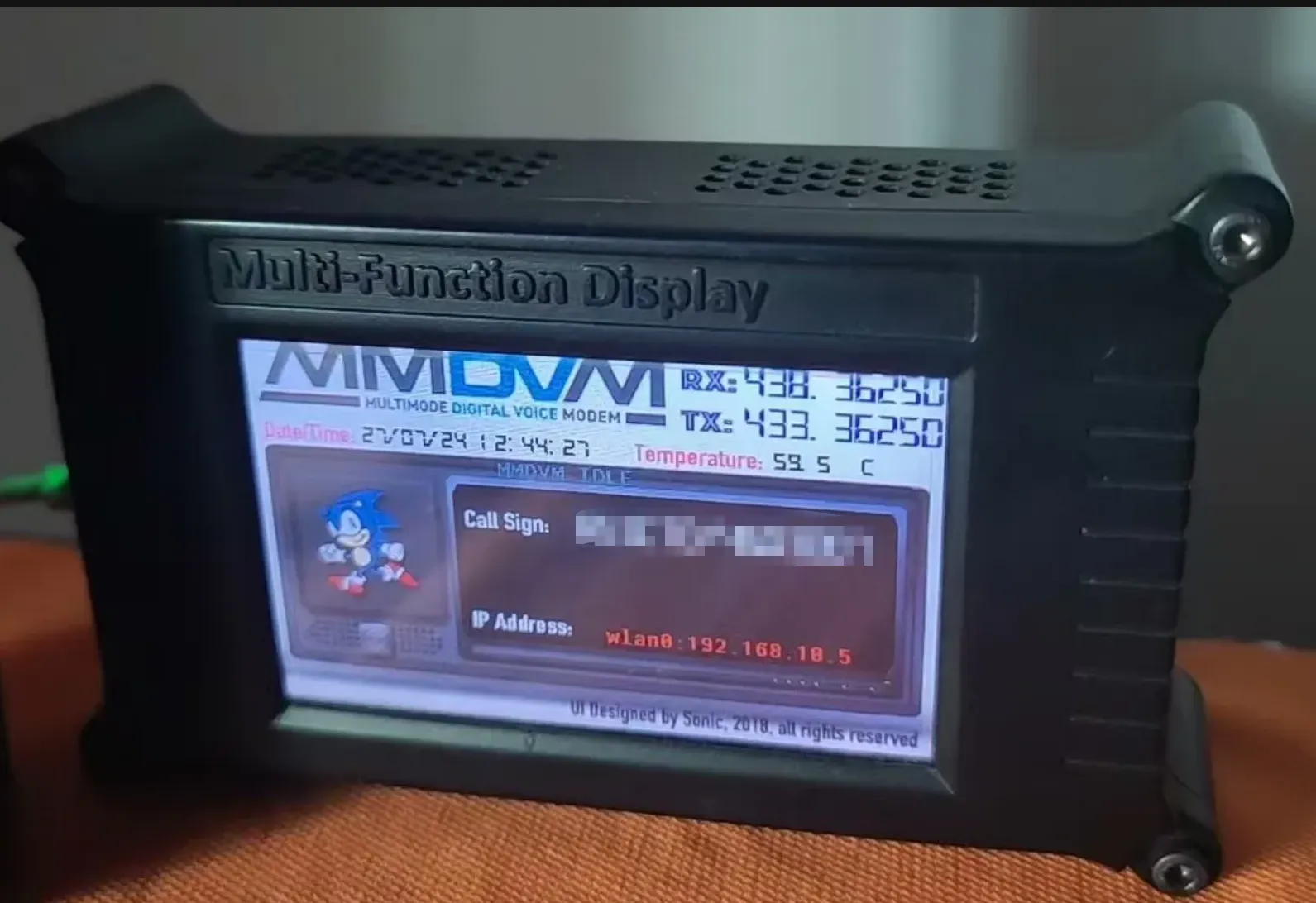
I've recently started using DMR, but I still find local repeater operation enjoyable. I was interested in trying an MMDVM hotspot box, but the prices on Xianyu (a Chinese online marketplace) were a bit high, with some costing around 400-500 RMB.

I spent a few days searching on Xianyu, and finally found someone selling this kit: a dual-band access point board, a Raspberry Pi Zero W, plus a battery and a 3.5-inch touchscreen. I got it for 300 yuan, which was great!
After receiving it, I tested it and found that the functionality is normal and the performance is good. The only downside is that it can only connect to Wi-Fi. Since there are boxes available on the market with 4G capabilities, I might as well add one myself.
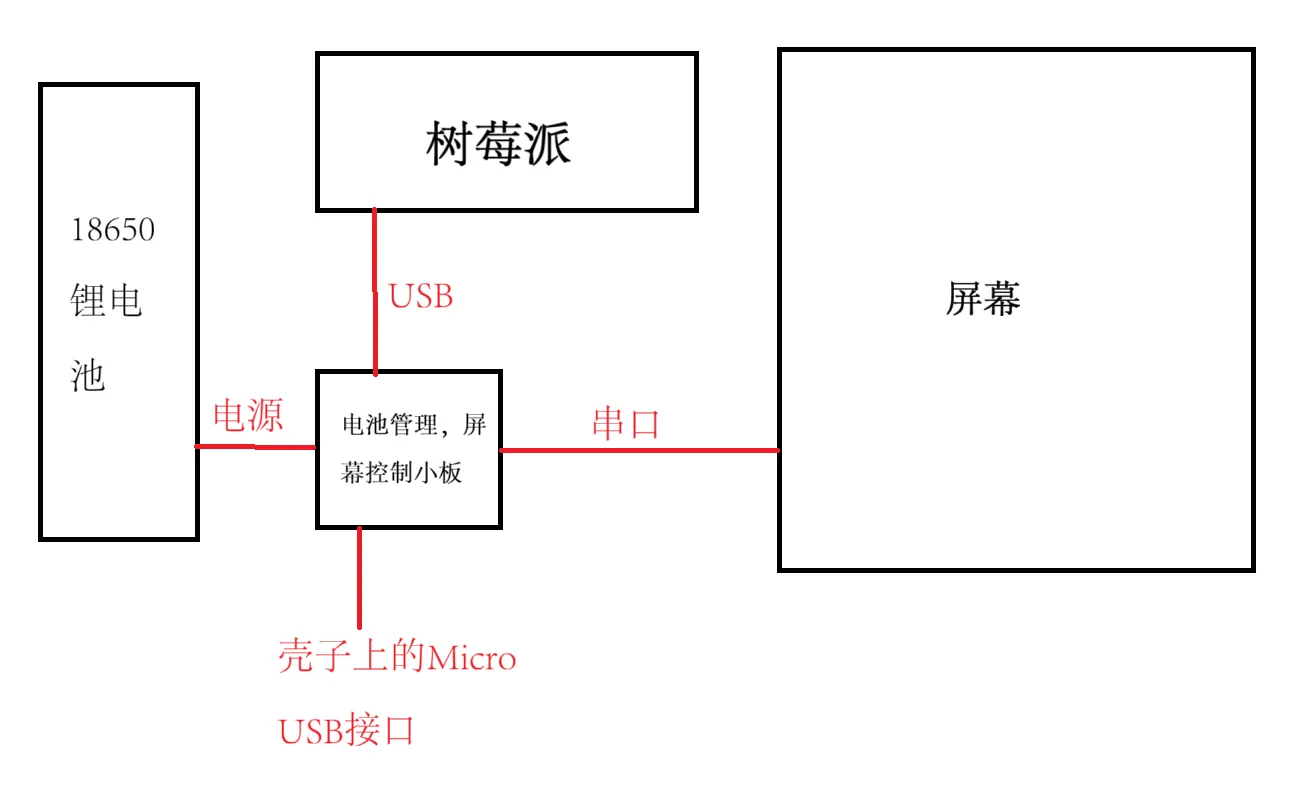
The Raspberry Pi Zero W has two Micro USB ports, but only one of them is functional for charging, while the other can only be used for data transfer. The current circuit diagram is as follows:

Therefore, it should be possible to use a Micro USB port on the small board to connect to a 4G network card and enable 4G internet access. I then checked Taobao.
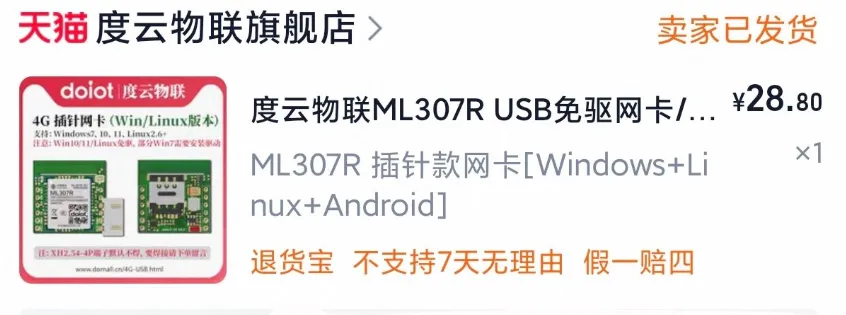
I have discovered this module:

This Linux system doesn't require a drive and costs only 28. It's a great deal, you can't lose out on this. Originally, there was a version with a USB-A port that could be used with an adapter. However, I didn't want to have an external urine bag attached, so I bought this one with the soldering points. Since I decided to integrate it, I need to think carefully about how to connect it to the Raspberry Pi.

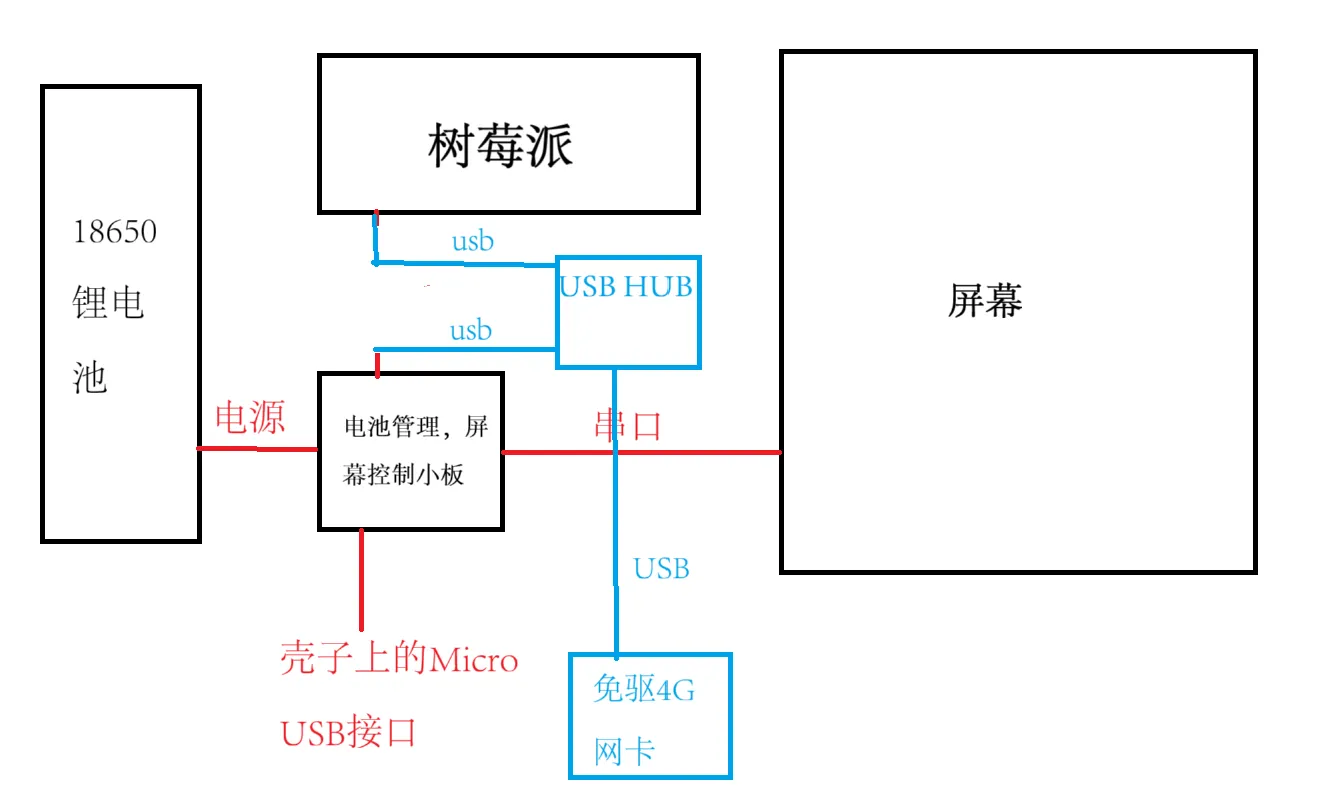
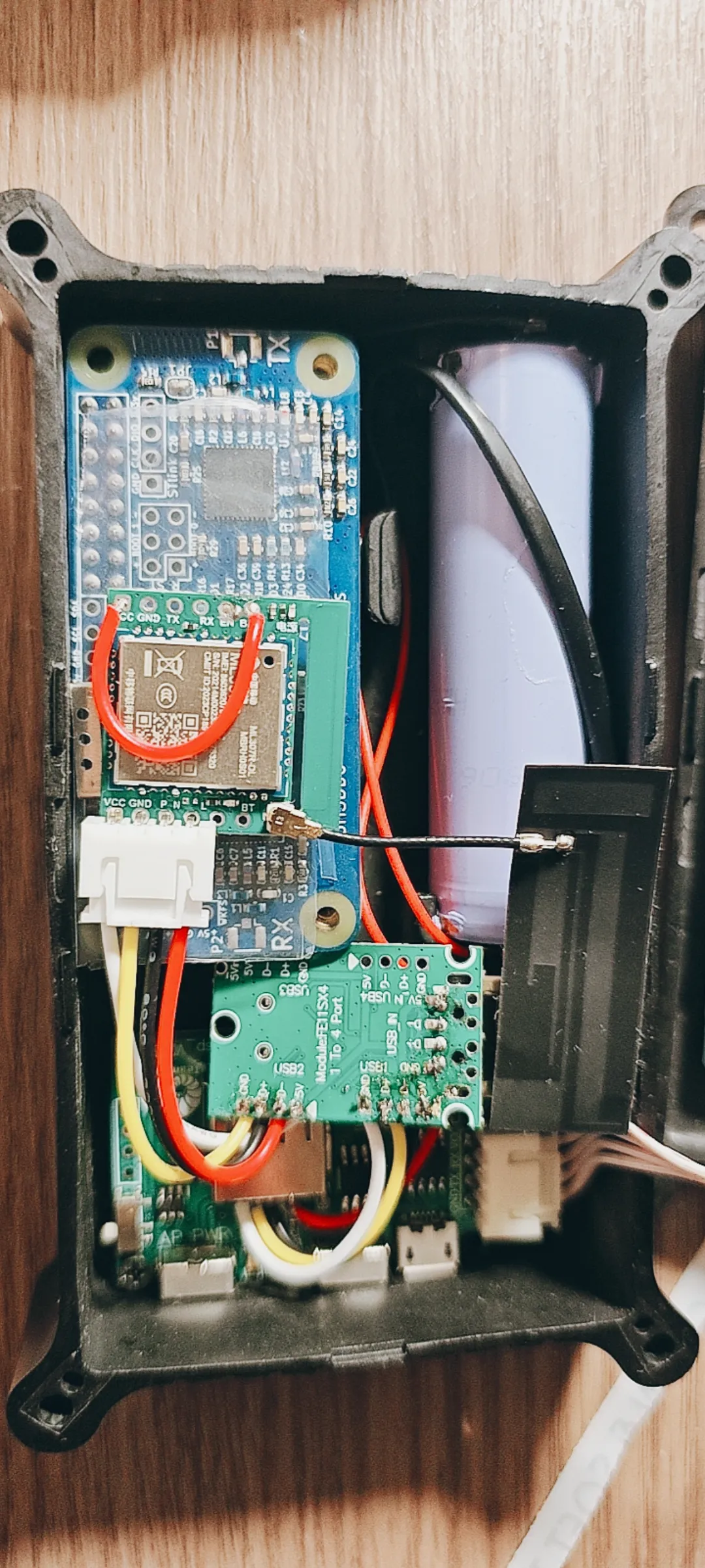
I decided to add a USB hub module between the Raspberry Pi and the NanoPi, which would allow me to connect multiple USB devices to the Raspberry Pi, including both the NanoPi and the network card.

Finally, and successfully, I spent around 30 yuan (including a cheap USB 2.0 module for about 5 yuan) to add a 4G module to my box. After setting it up, the box's system can automatically recognize and use this network card without any additional configuration.
If your box is a Raspberry Pi 4B, which has multiple USB ports, you don't need to add a USB hub; you can simply purchase and plug it in. If you want to integrate it internally, you can consider using a USB breakout board to connect the module.
My battery management chip is the IP4056, and I checked its specifications; it supports a maximum current of 1A, which means it can only provide less than 5W of power. The 4G module's manual states that the power consumption is around 2W when communicating. When combined with the Raspberry Pi and screen, it's definitely not enough power, and I often encounter problems where the voltage drop is too high, preventing the 4G module from starting. After consulting the manual, I found that this module can be powered by either 3.3V or 5V. If you are also experiencing similar issues, you could consider connecting a 5V USB cable to the module's 3.3V input. However, I think modifying the wiring is too complicated, so I simply connected a wire between the module's 5V and 3.3V inputs. This works fine after the voltage drop. But it's important to consider the heat dissipation issue.