This article was also published simultaneously on my personal website. You can access it here.
The user manual, programming software, and other related materials for the M700PRO can be obtained by clicking here. Related tutorials will be released subsequently.
UseYaesu DX10I found that the digital mode was too extreme, so I thought about getting a M710-like console. This way, I wouldn't have to worry about screen burn-in or instability issues that could arise from transmitting at unusual times. In the end, I managed to acquire this M700PRO.
The M710 and M700PRO share similar body designs, differing only in the front section, which is specifically designed for marine use, commonly referred to as a "boat deck." While both have basic versions, one is specifically designed for boats and includes a button that emits an alarm sound for emergency situations. The other version is designed for coastal or land use and does not include this button; instead, it has a plastic cover over the corresponding location.
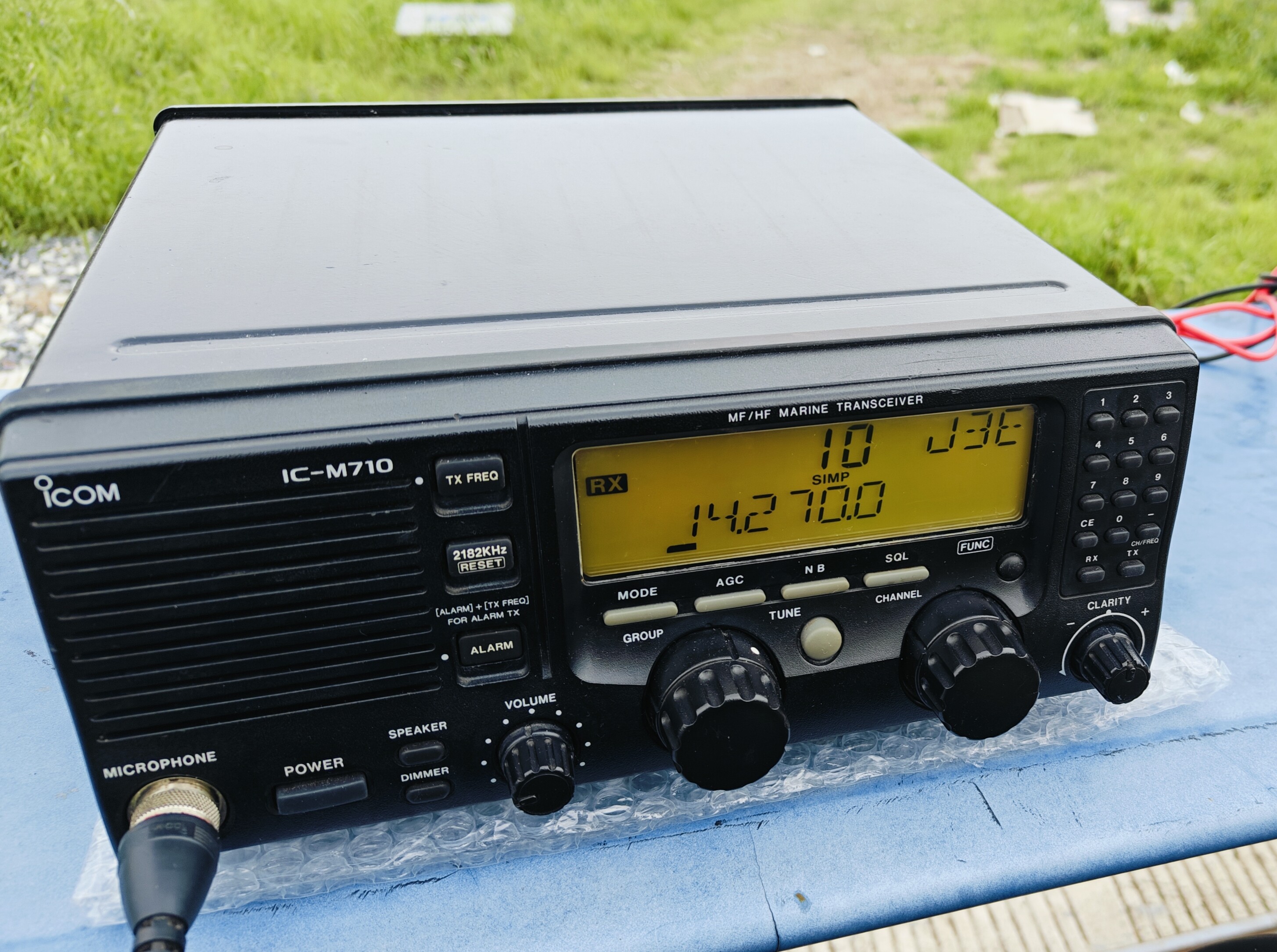
(The image above shows an M710, which I borrowed from a friend last year, equipped with an alarm button.)
The machine I bought doesn't have an alarm button, and it was shipped from Ürümqi, Xinjiang. It seems to be a domestic machine. The advantage of domestic machines is that they are less corrosive and have a lower probability of component failure, but they tend to be slightly more expensive. On the other hand, the advantage of imported machines is that they are cheaper, with prices ranging from around 1000 yuan or even just a few hundred yuan.
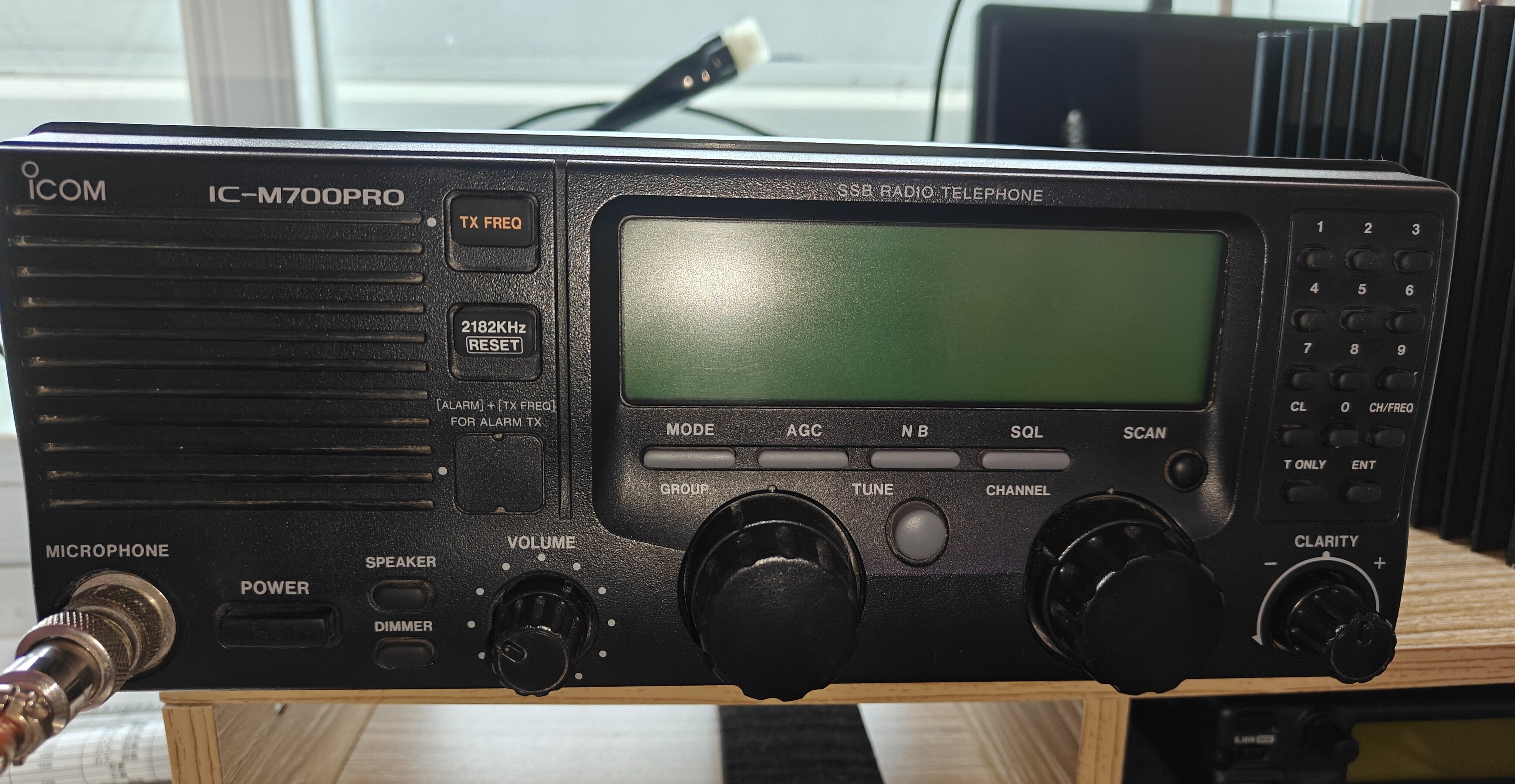
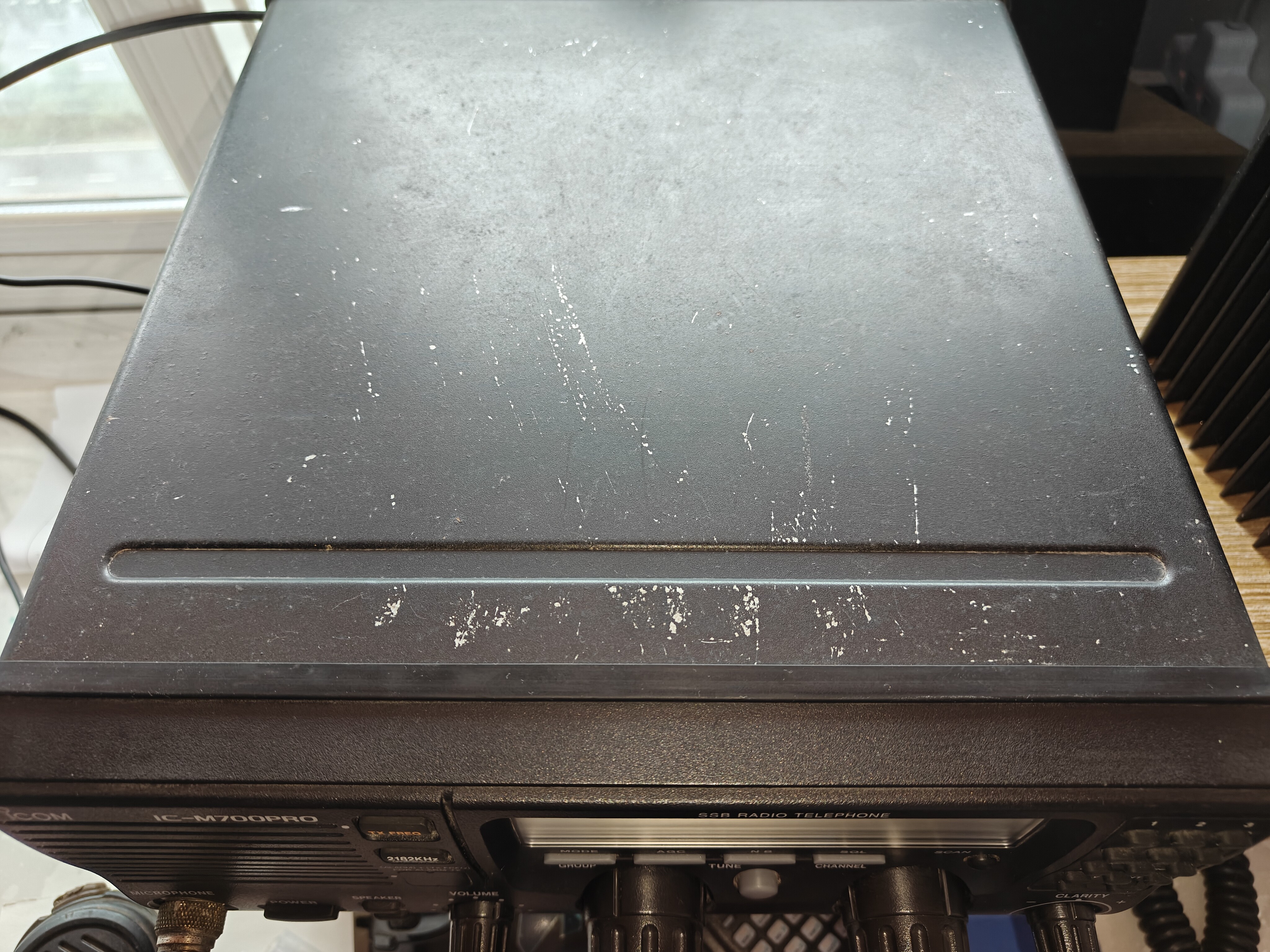
The machine panel finish is pretty good, with only a few minor scratches. The metal casing has some wear and tear, but it hasn't warped or become dented. A fresh coat of paint would make a big difference.
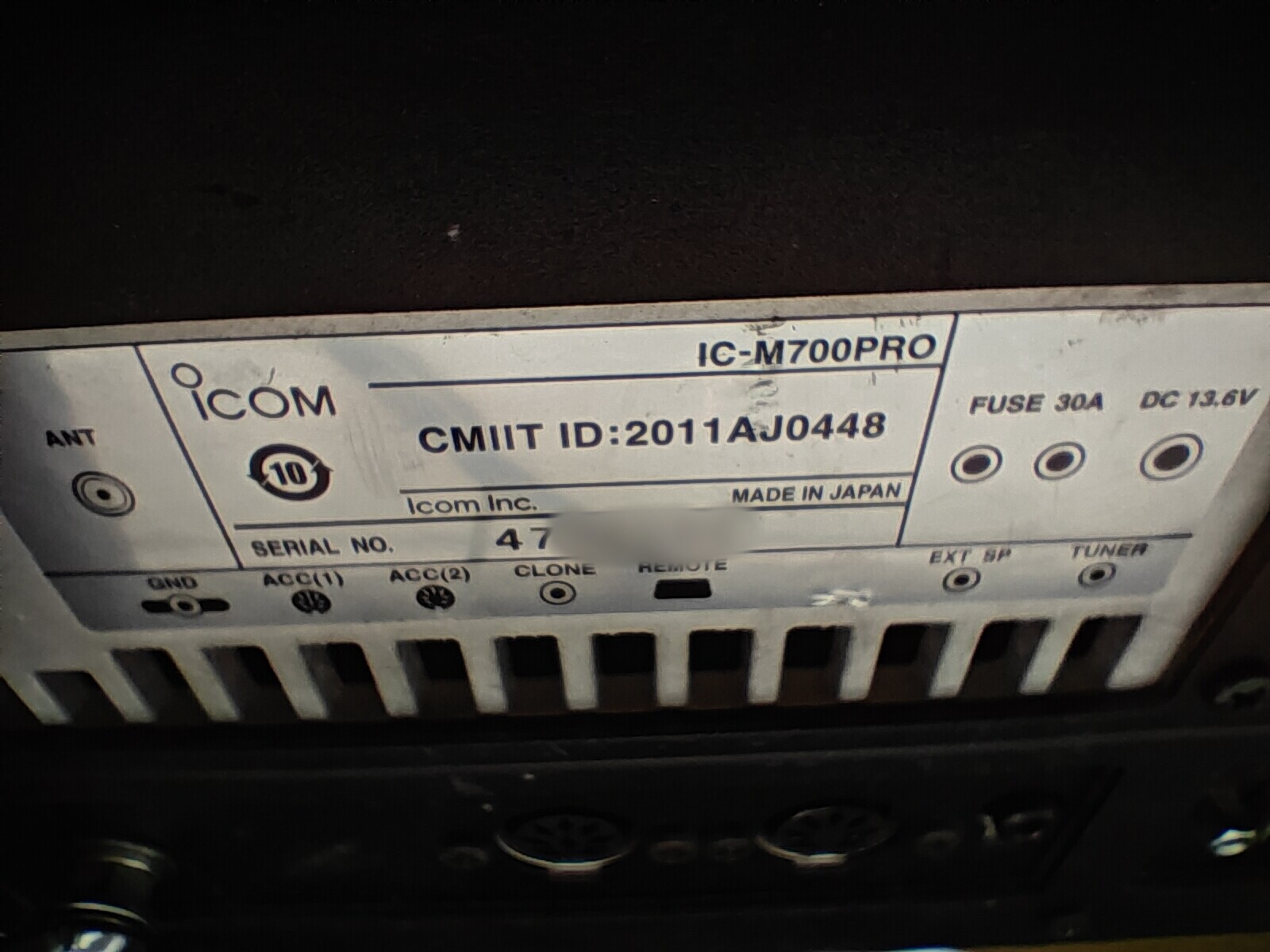
The machine has a certification code and serial number on its back, with the serial number starting with "47". According to the query, this is a new version of the machine produced within the past 10 years.
The next step is disassembly.
The lower part of the machine consists of a frequency synthesis section and a receiver, among other components. Here's the frequency synthesis board:
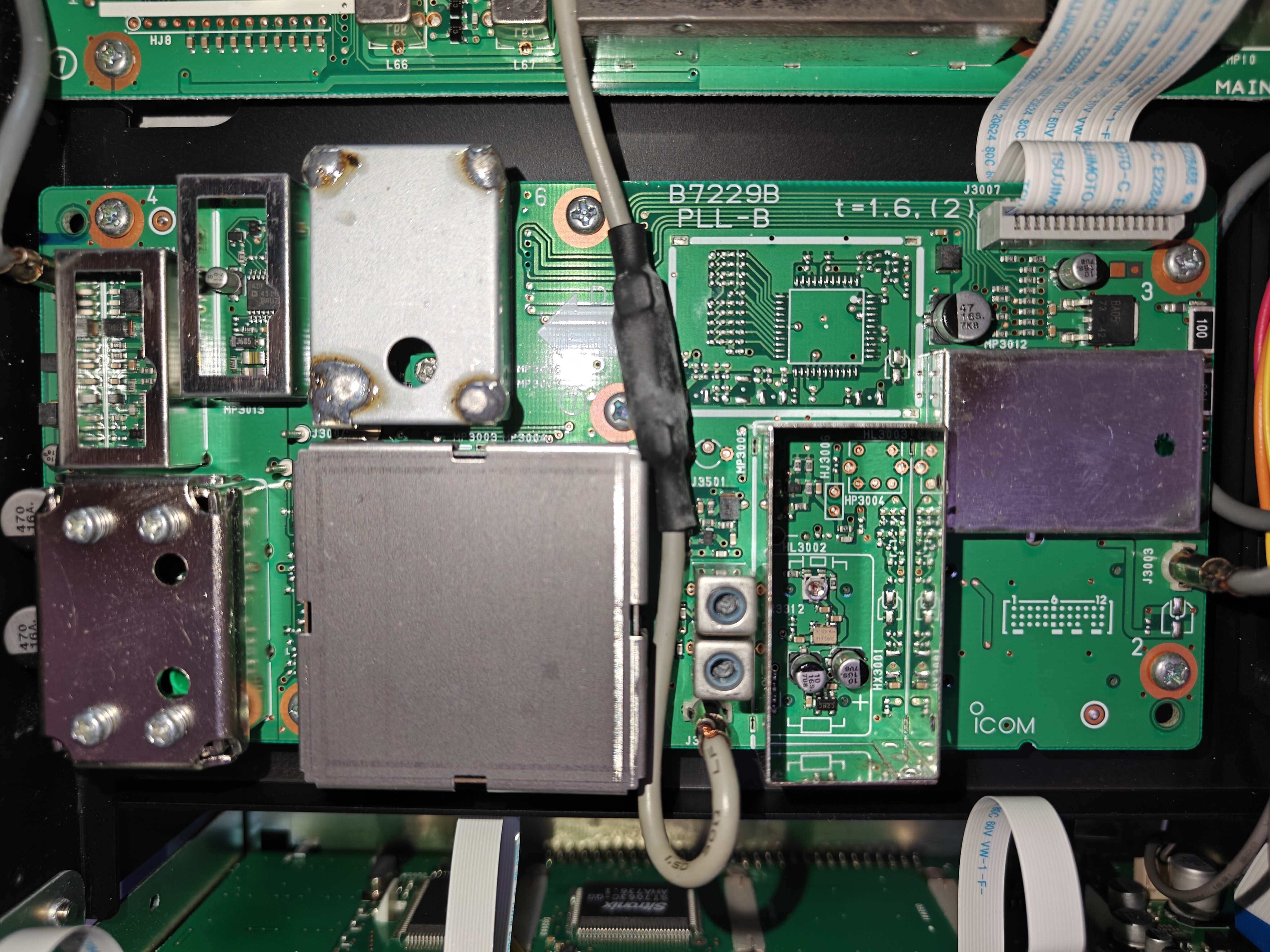
Those familiar with this type of equipment may notice that there are no square temperature-compensated crystal oscillators (TCXOs) anymore; the older M710 and M700PRO models both used TCXOs, typically CR-282. However, the new models do not have that small square component; perhaps they use more stable oscillators with frequency deviations of ±20Hz within the first startup or a few hours after power-on.
The above diagram shows the board for receiving and transmitting synthesized signals. There have been several changes compared to the previous design, including modifications in the selection of components such as capacitors and diodes. The empty space in the upper left corner of the heat sink fan is intended for installing a CW filter; however, since I don't frequently use CW, I haven't considered adding one yet.
The upper half of the machine consists of the amplifier, low-pass filter, and distribution board. After removing the casing, there is a metal plate covering the upper half. Removing this metal plate reveals the circuit board underneath:
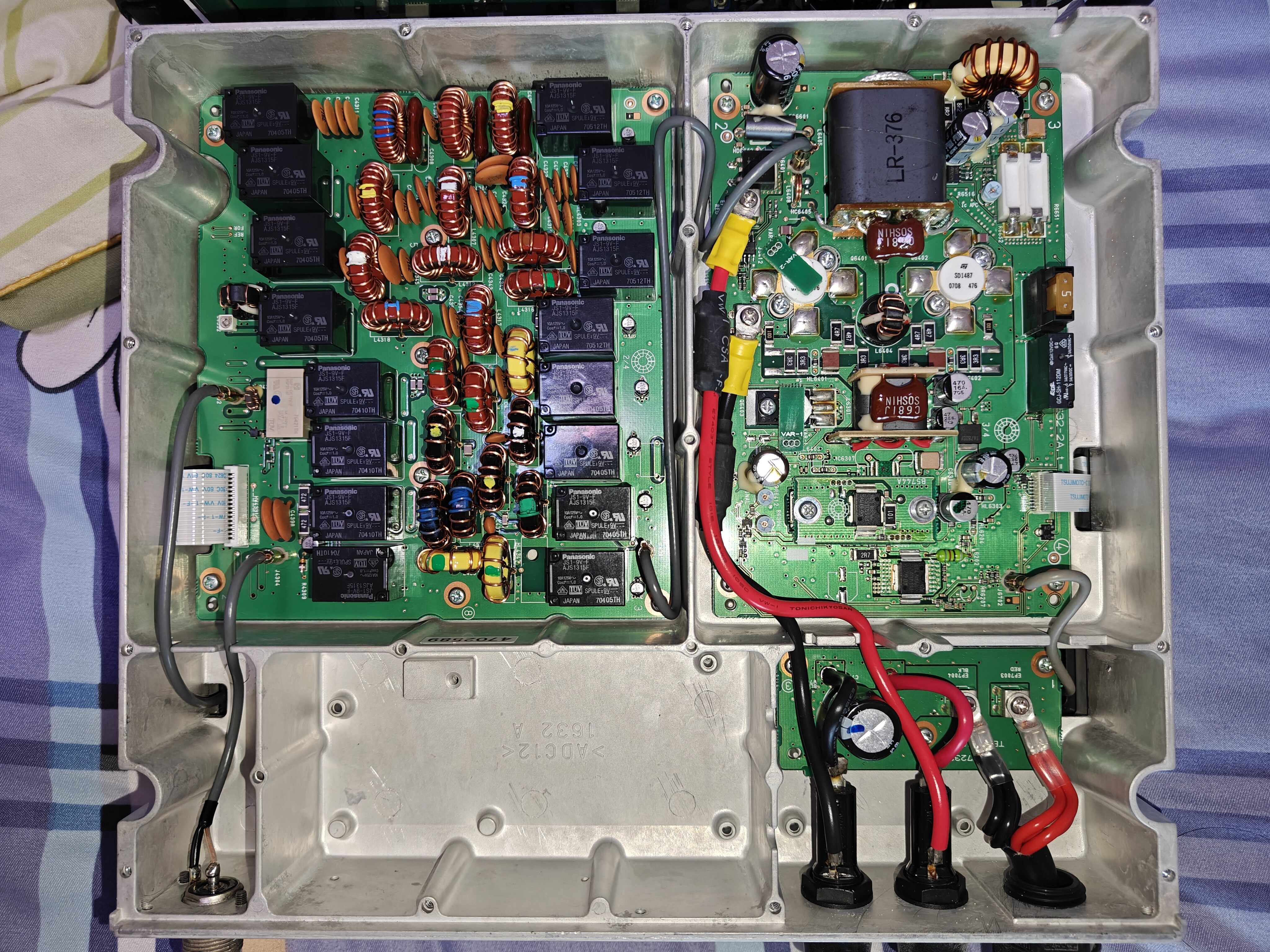
The vacant position below is for pre-allocating GMDSS version machines.
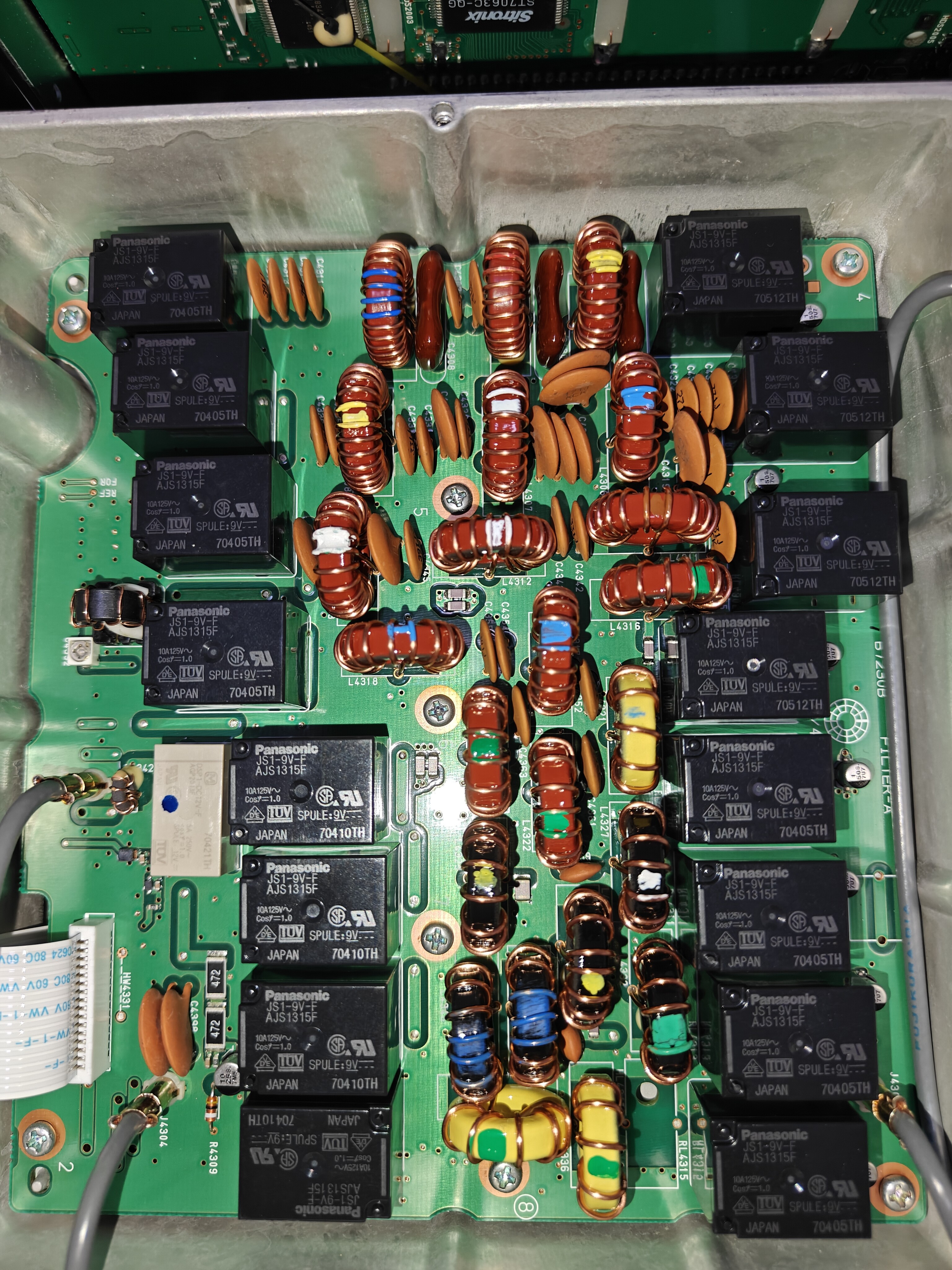
On the left side is the low-pass filter board; the shiny coil looks very nice.
On the right side is the amplifier board, which shows a significant difference compared to older versions. It has been almost completely redesigned. The main amplifying tube has been replaced with a field-effect transistor, and other parts have also undergone changes.
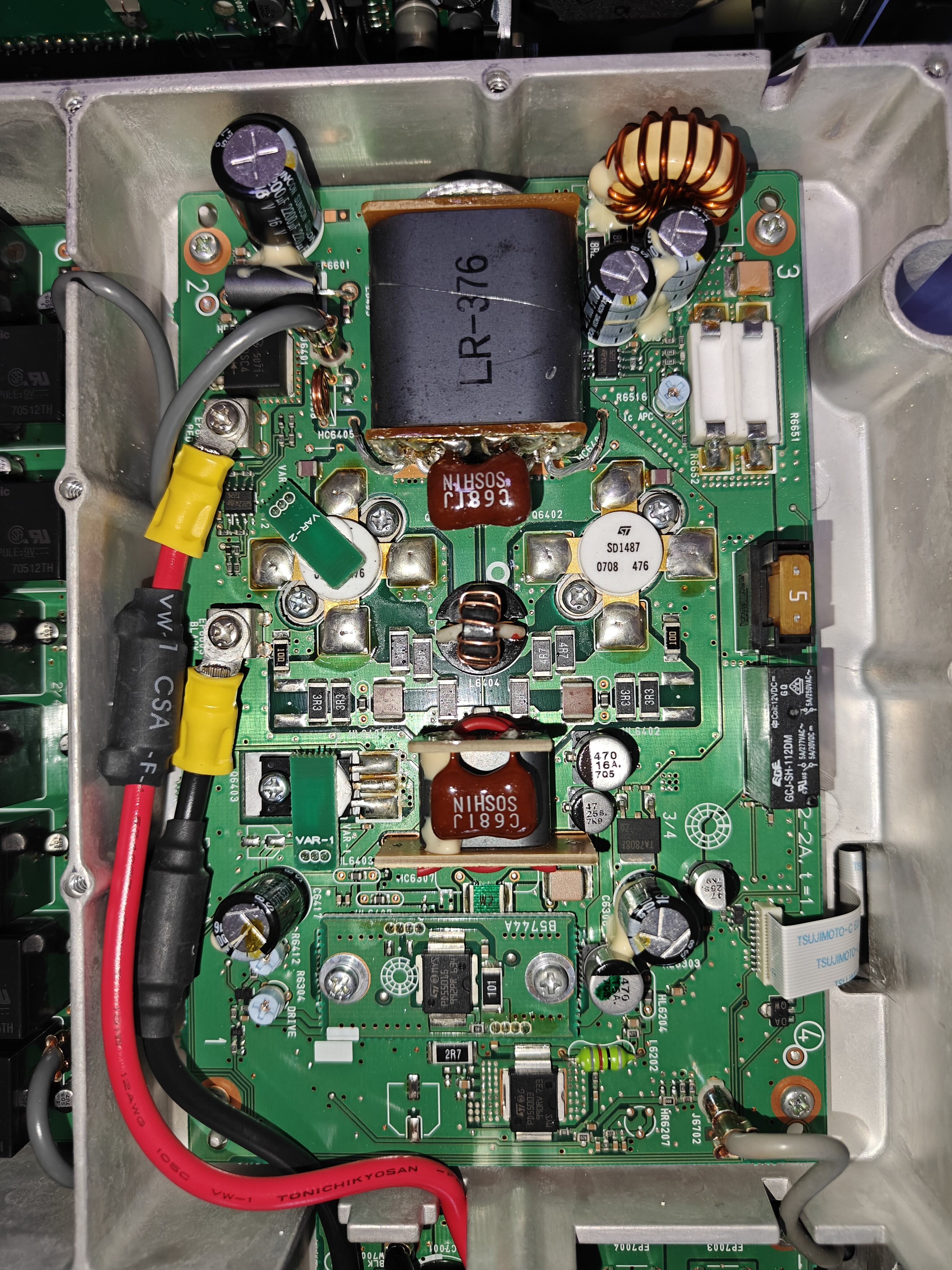
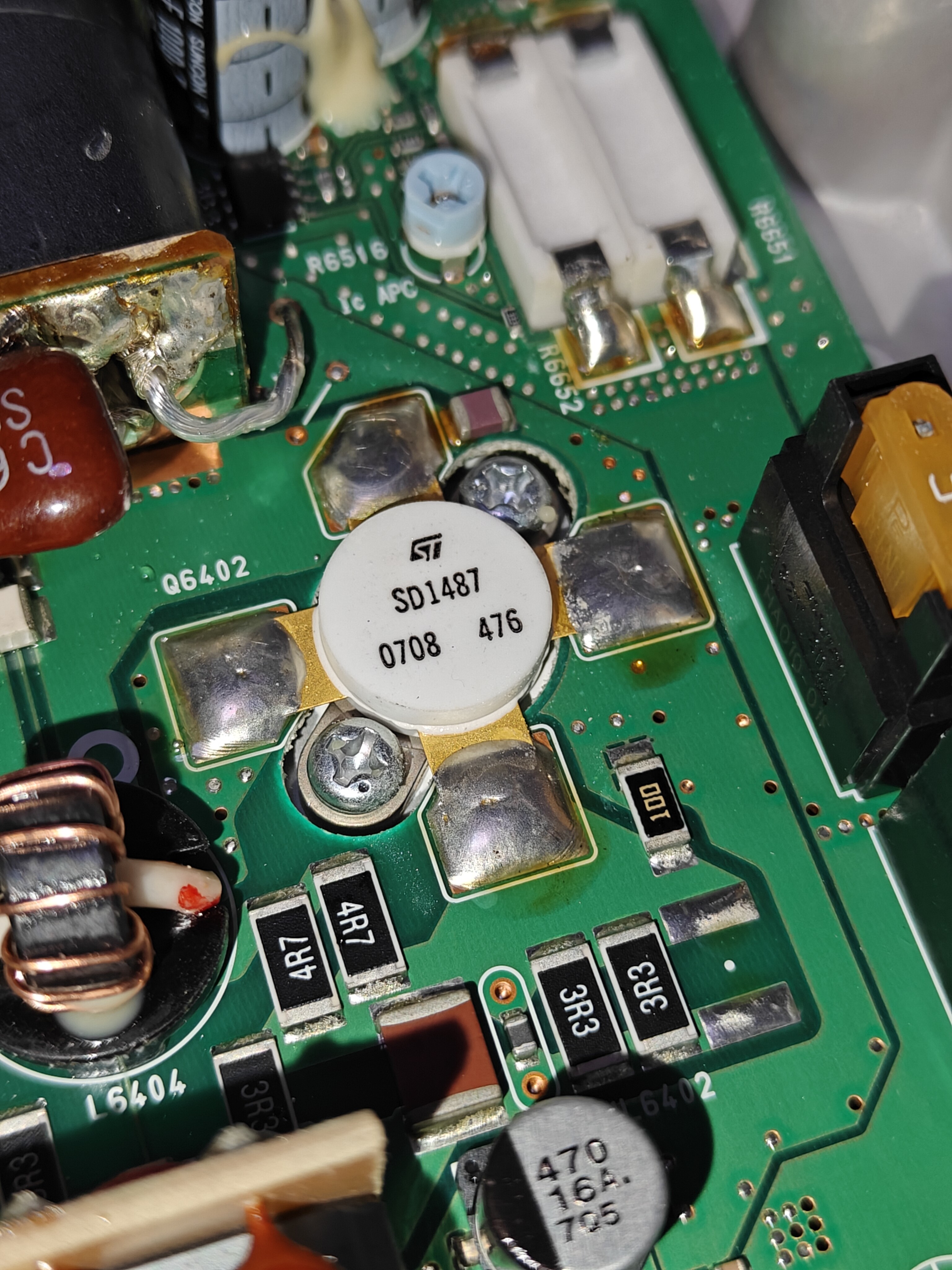
The amplifier tubes use SD1487 high-frequency three-terminal transistors from STMicroelectronics, designed for frequencies below 30MHz. A single tube can stably output at least 100W of power, and using two tubes to drive the M700PRO with a power output of 150W is no problem.
Here's a close-up shot of a power amplifier tube:
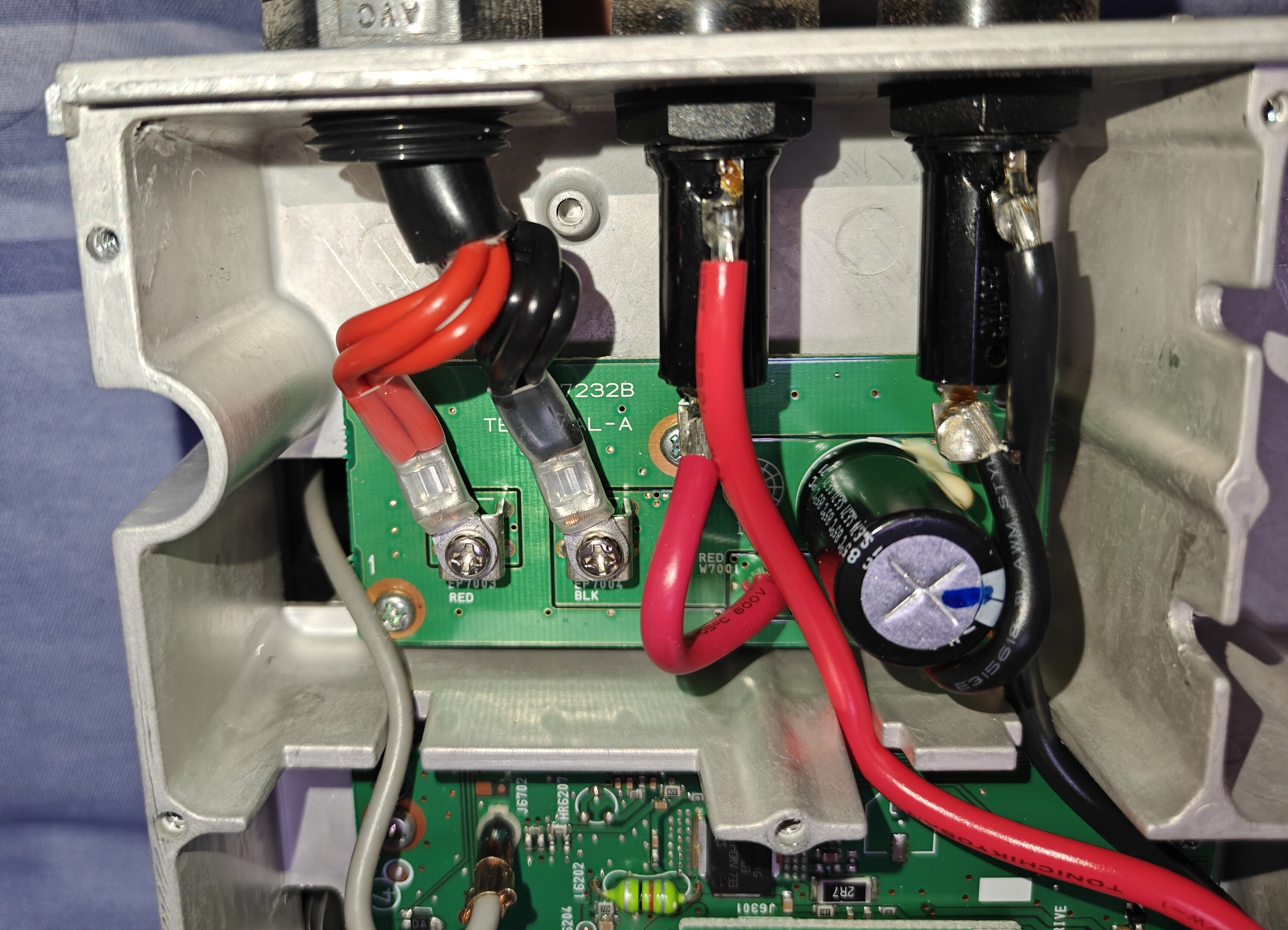
Finally, there's the power board. You can see that it has separate fuses for both the positive and negative terminals, as well as a capacitor, which is likely used to buffer voltage fluctuations.
Both the M710 and the M700PRO are devices that have been in use for approximately 30 years. The machines themselves are sensitive enough, have a robust structure, and the amplifiers are durable. However, newer models are primarily SDR (Software Defined Radio) devices, which offer spectrum displays and are therefore more suitable for enthusiasts. Of course, digital modes like FT8, or simply chatting about frequencies at a market, also make these affordable and versatile machines ideal as backup radios.
Both devices are continuing to be produced, and the latest version of the M710 amplifier board now uses the AFT05MP075N field-effect transistor. This transistor is designed for 136-520 MHz, 75W, and is used with impedance matching for shortwave operation, allowing for greater power output. The other parts are identical; the machine's serial number starts with "6".

 闽ICP备2021006864号-7
 闽公网安备35020602002794号