Machine Translation
What is ALE?
ALE is an acronym for Automatic Link Establishment.
ALE (Automatic Link Establishment) is essentially the global standard for initiating and maintaining communication using high-frequency radio. HF radio transmits signals through the ionosphere, which is a constantly changing medium.
Amateur radio ALE (Automatic Link Establishment) operator networkUtilize interference-free, HAM-friendly ALE technology for continuous operation of 5 years worldwide.

Automatic link establishment can utilize specific HF radios, a group of radios, a network, or an interconnected radio system. This is a versatile system for connecting the voice, data, text, instant messaging, internet messaging, or image communication of radio operators. A radio operator initiating a call can have ALE automatically select the optimal frequency used by both radios within minutes. Then, it will alert both operators via audio and visual means so that they can immediately begin communicating with each other. In this way, it eliminates the need for long-term, repetitive calls and monitoring of HF radios on a pre-determined schedule.
How ALE works
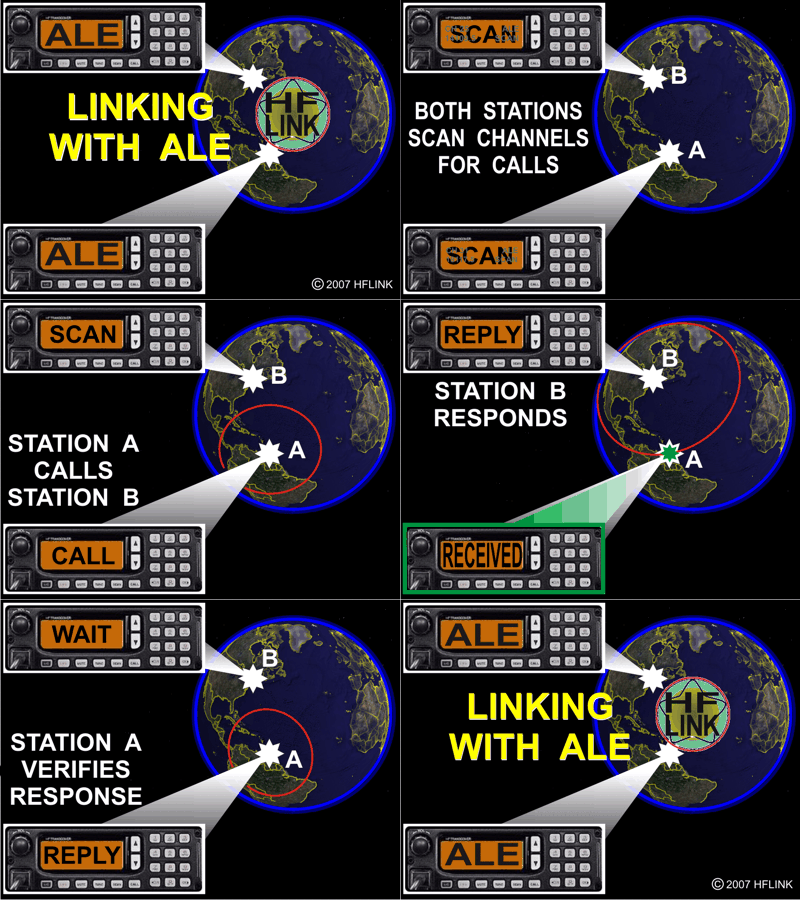
Each ALE radio uses the call sign or address from the ALE controller. When not actively communicating with another radio, each HF SSB transceiver continuously scans a list of frequencies, listening for its call sign. To reach a specific radio station, the caller simply enters the call sign, just like dialing a phone number. The ALE controller selects the best available frequency and transmits a short digital "call" signal containing the call sign, lasting approximately 15 seconds. When the remote scanning station detects the first few characters of its call sign, it stops scanning and remains on that frequency. The two ALE controllers automatically handshake to confirm that a link has been established and that they are ready for communication.
Previously silent receiving stations typically issue both audible and visual alerts to the operator handling incoming calls, and also indicate the call sign of the linked station. The operator can then engage in normal communication. At the end of a QSO, one station sends a disconnect signal to the other, and each station returns its ALE station to scanning mode. Some military/commercial HF transceivers offer an ALE option. Amateur radio operators typically use PCALE audio card software to control ALE via RS-232 CAT ports and multi-band antennas connected to their amateur transceivers.
Automatic Link Establishment is a great tool for real-time communication between sites, while completely avoiding guesswork, beacon listening, and complex HF prediction charts. ALE is most commonly used for voice communications on SSB and internet message connections for operators, but it also has many other useful features.
Encourage all enthusiasts to use ALE. Conducting emergency/disaster communication and routine QSOs (radio transmissions)。Join us!
I haven't heard of any domestic HAM radio operators using ALE, but it seems quite useful. It would also be convenient for emergency communication. The "HF/VHF Digital Communication Handbook" includes information on automatic link establishment.
HELINK website link:http://www.hflink.com/